My Number One Recommended Exercise for Hip Health: The ATG Split Squat
Hip Health
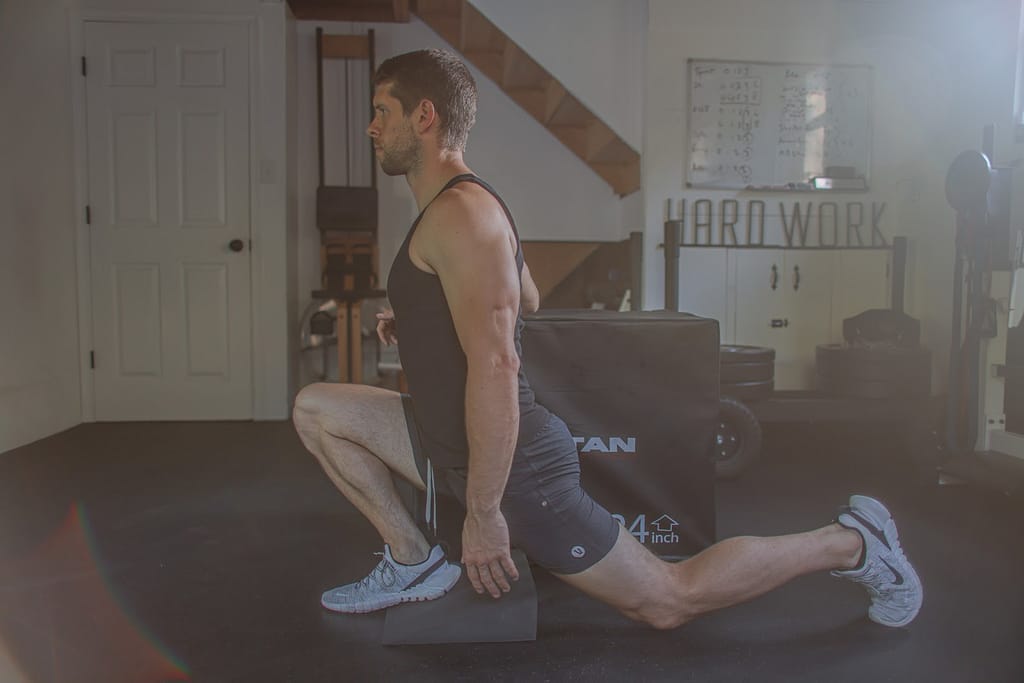
The ATG split squat has been made popular by Ben Patrick of the ATG system. He uses it with his clients to restore knee function and reduce pain.
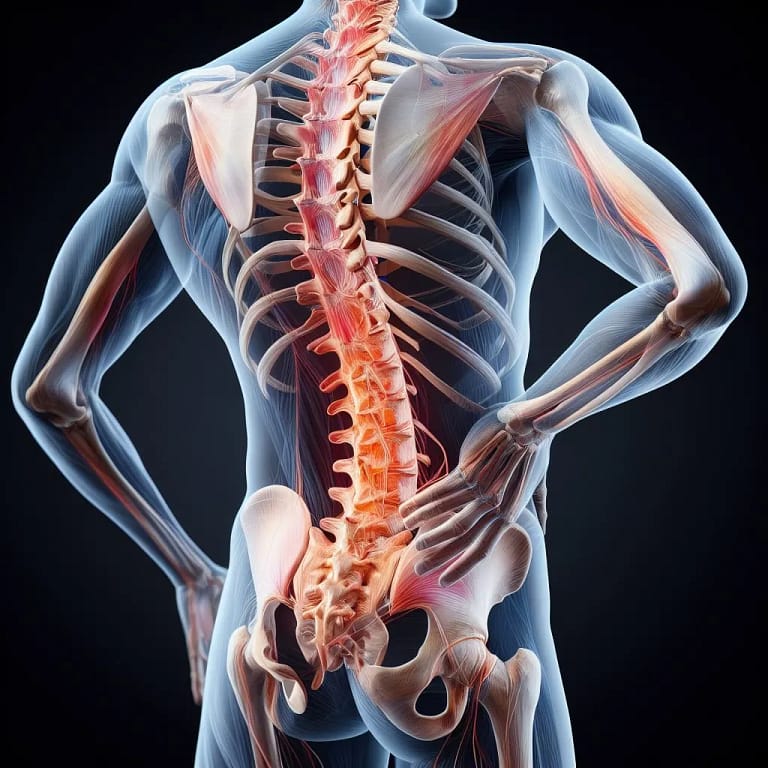
But it may be even more beneficial for lower back and hip health.
Why might this be? Well, It is a split squat that is taken to the deepest range of motion, asking a lot of the flexibility of the hip flexors. The hip flexors are responsible for hip flexion with which more than 70 percent of people are lacking optimal range of motion in. If a person lacks hip flexion, they will compensate with more spinal flexion whether they realize it or not.
Because we spend so much time sitting, our hip flexors get passively short. This means that they shorten over time without having to contract, so they end up losing length and that is why we see so many hip flexor and low back strains. The ATG split squat can help restore hip flexor length, which is why I believe it can go a long way in helping to restore hip and back health.
Because the ATG split squat is a strength movement rather than a passive stretch, it allows your hips to develop strength at deeper ranges of motion. It develops unilateral strength, fixing any imbalances you may have accumulated from bilateral movements like squats and deadlifts. It can be performed anywhere which allows for greasing the groove.
For all these reasons, the ATG split squat is so beneficial for not only the knees but the hips and low back as well.
Don’t just jump into performing repetitions, however. Make sure to follow the proper progressions.
Couch Stretch
(2x:60 per leg)
The couch stretch sounds great doesn’t it? False. If done correctly, the couch stretch is one of the most painful stretches you can perform. But it’s so damn beneficial.
The hip flexors are very tight and short muscles thanks to the amount of time we spend sitting (I’m sitting as I type this now). This passive position causes the muscles to become shortened over time. This isn’t a problem until we are required to do activities upright and we end up overextended at the low back. Oftentimes the low back will compensate for the hip flexors by over extending.
To perform this stretch, kneel one knee on the floor (maybe on a pillow or pad) and lean your hips forward until you feel a stretch in the upper front part of the back leg. This is a simple hip flexor stretch. Easy right?
The couch stretch is different in only one way that makes such a difference. Simply by placing your back shin up on a wall or a couch we wind up the rear leg hip flexor so much. You can start with your hand on the ground but I want you to slowly make your way to an upright position. Keep a chair next to you to help you into this position. It’s getting a little more painful isn’t it?
Ok let’s make it even worse.
Try to contract your glute of the back leg. This should make you feel a stretch so intense you’ll ask yourself why you’re doing this (low back and hip health in case you forgot).
If it’s too intense try holding the gluteal contraction for 3-5 seconds at a time.
Try to hold this stretch for a minute at least on each side. Don’t be surprised if you find one side to be more painful (tighter) than the other side. Addressing these left/right asymmetries can help alleviate any back and hip pain you might have.
Deep Squat with Heels Elevated
Try to keep your torso as upright as possible. Sink down with control, hold the bottom position for 2-5 seconds then return to the start position. When you push off the bottom to come back to the top, don’t let your hips shoot backwards. Press with your quadriceps and maintain an upright chest as much as possible.
ATG Split Squat with Heels Elevated
(2×3-5 repetitions per leg)
Now it’s time to attempt the ATG split squat, however we are going to perform the movement with the front heel elevated to help with sinking down to the appropriate depth more easily.
This time you only need one weight plate or book or dumbbell because we only need to elevate the front heel. If you don’t have something to elevate your heels then simply raise your heel up and stay on your toes like shown in the video.
Set up in a split squat or split stance position with your front foot about 2 feet in front of your back foot. With your weight predominantly on your front foot, sink down and forward until your front leg hamstring is touching your front leg calf.
You should feel a stretch in your trailing leg hip flexor. Follow the same rules of the squat here and make sure to keep your chest upright. Hold the bottom position for 2-5 seconds before pressing into the floor with the front foot and returning to the start position. Don’t let your chest drop forward.
Make sure to have something to the side of you (like a chair) to help you with balance, especially if you are having trouble keeping your chest upright.
Preventing Injuries – Greasing the Groove
The greatest part of this challenging movement is that it can be performed anywhere and requires little to no equipment. That means you can (and should) practice this exercise as often as you can. Your goal should be to be able to sink down and come back up with little trouble, tightness or without requiring heel elevation.
The ATG split squat will improve hip flexor length, strength and stability. Since the hip flexors are often the main culprit in individuals lacking hip flexion, I think that makes this exercise a prime tool for addressing not just knee dysfunction but low back and hip pain as well.
References:
- Herrera MC, Amasay T, Egret C. Lack of Correlation Between Natural Pelvic Tilt Angle with Hip Range of Motion, and Hip Muscle Torque Ratio. Int J Exerc Sci. 2021 Apr 1;14(1):594-605. PMID: 34055146; PMCID: PMC8136572.
- Herrington L. Assessment of the degree of pelvic tilt within a normal asymptomatic population. Man Ther. 2011 Dec;16(6):646-8. doi: 10.1016/j.math.2011.04.006. Epub 2011 Jun 11. PMID: 21658988.